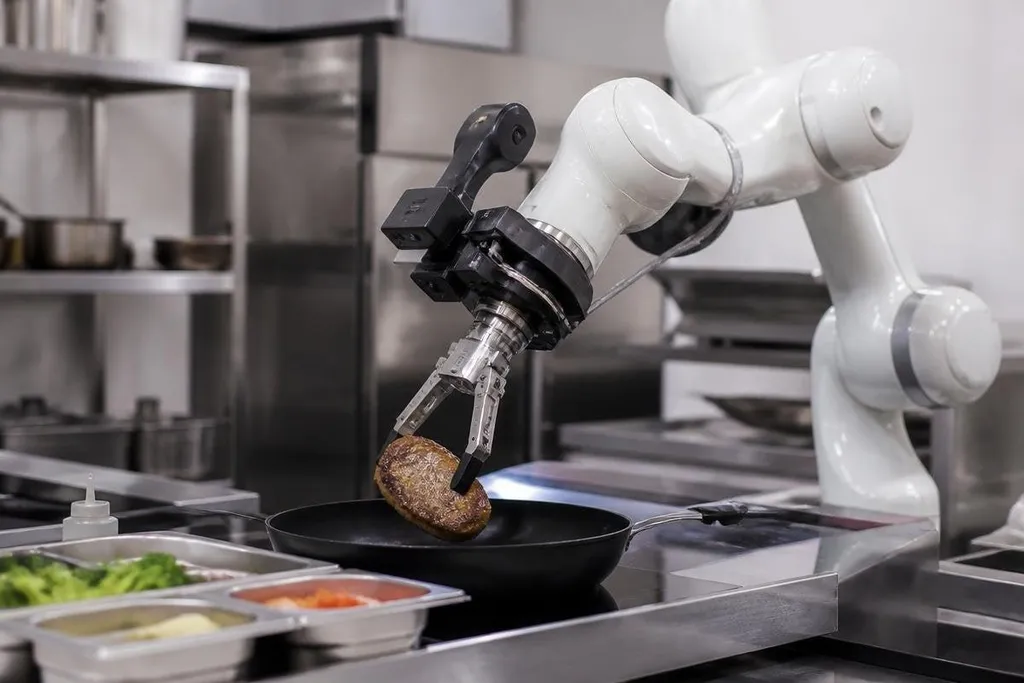
A cooking robot has to handle food that changes shape, temperature, and texture from one minute to the next. The next useful gains will come from better sensing and safer contact with food, not from a robot arm moving faster.
If you’re assessing automation for a restaurant, test kitchen, or food plant, these are the areas that deserve your attention.
- Better vision should help robots find food in mixed trays and crowded work areas.
- Force sensing may reduce torn dough, crushed produce, and dropped pans.
- Heat control will decide whether a robot can cook a dish, rather than only move ingredients.
Vision that works around food
Most factory robots work with objects placed in known positions. A kitchen rarely offers that order. Ingredients may overlap, shift during a task, or arrive in different sizes.
Cooking robots need cameras that can identify an item and estimate its position before the gripper touches it. Depth sensing adds distance, so the robot can tell whether a tomato is on a tray or inside a bowl. That information matters when one wrong pick can scatter food across a work surface.
The harder problem is appearance. A raw chicken breast, a cooked chicken breast, and a browned piece of bread may share similar shapes while needing different actions. A useful system will need to connect what it sees with temperature, cooking time, and the next step in the recipe.
Hands that feel the food
A gripper can close around an object without knowing how much pressure it uses. That works for a rigid box. It can damage a filled pastry or split a soft bun.
Force sensing gives the robot feedback about contact. The system can slow the motor when resistance rises, hold a pan steady, or change its grip when an item slips. Tactile sensors may add more detail by detecting pressure across the fingers.
This area will matter most in tasks that need careful handling. A robot that picks up one sealed container is easy to judge. A robot that folds dough, turns a fragile item, or places food without touching the rim of a dish faces a harder test.
Food changes as it heats, so a cooking robot needs timing as well as careful motion. Cooking robotics reporting from Robot24.com can tie claims about these systems to a named robot, test setting, date, and result. The next section looks at heat and timing.
Heat and timing
Moving ingredients is only one part of cooking. The robot also needs to manage heat, timing, and the condition of the food.
A cooking cell may combine an arm with an oven, induction hob, fryer, or mixer. The arm needs to place cookware accurately, while sensors check temperature and the control software follows the recipe step by step. A six-axis arm can reach many positions, but reach alone says little about whether the food is ready.
Heat creates a safety issue too. Metal pans, steam, oil, and open surfaces can harm people and damage sensors. Any system used near staff needs clear stop controls, guarded hot areas, and a way to detect a person entering its working space.
Cleaning is part of the robot
Food leaves residue in places that are hard to inspect. Grease can reach joints, flour can enter moving parts, and water can damage electronics. A machine that cooks well but takes too long to clean may cost more time than it saves.
Designers will need to show which parts come off, how workers wash them, and how long a full cleaning takes. Food-contact surfaces also need materials and finishes that suit the task. These details belong in a trial from the first day, not after a purchase order.
The same rule applies to recipe changes. A restaurant may change portion size, pan type, or ingredients during a normal week. The robot should let staff adjust those settings without rebuilding the whole cell.
A practical buying check
Before you judge a cooking robot, ask the supplier to show:
- Food handling: Can it pick soft, wet, hot, or uneven items without damage?
- Temperature control: Which sensor says the pan or food has reached the target temperature?
- Cleaning time: How many minutes does a full wash take, and which parts need removal?
- Safety response: What happens when a worker enters the arm’s working space?
- Recipe changes: Can staff change portions and timings without outside support?
- Daily output: What task count has the system reached during a full working shift?
The strongest cooking robots will be judged by repeatable meals, safe cleaning, and steady work beside people. Until suppliers publish those results for real kitchens, the smart target is a narrow task with clear timing and easy inspection.